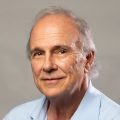
Mohsen Mahdawi did everything right. A refugee from the West Bank of Palestine, he entered the country legally 11 years ago. In 2015, he was granted a green card, which gave him the right to live and work permanently in the U.S. as a noncitizen. He then embarked on a lengthy path to earn citizenship that he had nearly completed this spring.
But none of it mattered to President Donald Trump and supporters of his administration’s racist immigration tactics.
The color of his skin, where he grew up, and the words he spoke in advocating for Palestinian rights as an undergraduate student at Columbia University made Mahdawi a convenient target.
Mahdawi, who owns property in West Fairlee, was back in Vermont over the weekend while awaiting a federal appeals court ruling that could go a long way in determining his fate and countless others — citizens and noncitizens alike — who find themselves in conservative Republicans’ crosshairs.
“The stakes are so high, but it’s no longer about Palestine,” Mahdawi told me when we talked Sunday in Montpelier, where he had accepted two invitations to tell his story. “It’s about democracy in this country, and the future of free speech. The constitution itself is on trial.”
That’s not hyperbole.
No matter which way the appeals court goes, the losing side in Mahdawi v. Trump can be counted on taking the case to the U.S. Supreme Court.
How scary is that?
I’m not confident the conservative majority views the rights to free speech as worth protecting in a police state, which if Trump and his loyalists have their way, is where we are headed.
“My case has become a test for this country,” Mahdawi said, following a hearing before a three-judge panel at the Second Circuit Court of Appeals in New York on Oct. 7. “Will America honor its founding values, or will it silence those who dare to speak for humanity?’
While his legal team, which includes attorneys from the American Civil Liberties Union, argues the case before an array of federal judges, Mahdawi continues to make his case in the court of public opinion.
Mahdawi, who is enrolled in a master’s degree program at Columbia’s School for International Public Affairs, was invited to speak at the Sunday morning service at the Unitarian Church of Montpelier and later in the day at the Savoy Theater in the capital city.
By accepting invitations to share his story and speaking up for Palestinians “living under genocide and oppression,” Mahdawi only further infuriates the Trump administration.
More power to him.
“The government is trying to imprison me,” he said matter of factly at Sunday’s church service. (Albeit while not having charged him with any crime.)
The Trump administration claims that even though Mahdawi is a lawful permanent resident of the U.S., he doesn’t have First Amendment rights. Mahdawi’s lawyers argue that “no one, citizen or noncitizen, should be locked up for their political views” and the Trump administration is punishing Mahdawi for his leadership role in the pro-Palestinian movement at Columbia.
In April, I watched ICE agents haul a handcuffed Mahdawi out of a U.S. immigration field office in Colchester, Vt., where he had gone voluntarily for a naturalization interview as part of his quest for citizenship. (I’ve known Mahdawi since 2020 when I wrote a two-part series about his journey from the West Bank to the Upper Valley. )
Mahdawi spent 16 days in a northern Vermont prison before U.S. District Judge Geoffrey Crawford ordered his release from federal custody in late April. The Trump administration appealed the ruling, which led to the Oct. 7 hearing in New York.
A decision could be days, weeks or months away. With federal judges, it’s hard to predict. They tend to operate on schedules all of their own. The odds of a ruling in Mahdawi’s favor aren’t great. The deck appears stacked against Mahdawi. Two of the three judges are Trump appointees.
As Mahdawi, however, reminded the crowd of some 75 people at the Savoy Theater on Sunday, “We can’t just blame Trump for all of this.”
The crackdown on free speech at college campuses, including Dartmouth, following the start of the Israel-Hamas war in Gaza two years ago, was set in motion before Trump returned to the White House in January. Trump just “capitalized on this moment,” Mahdawi said.
Mahdawi’s point was driven home in a new documentary, The Palestine Exception, that was shown at the Savoy on Sunday afternoon. The 70-minute film gets its title from the argument that America’s liberals have a blind spot when it comes to Israel.
The screening was sponsored by the Vermont-New Hampshire chapter of Jewish Voice for Peace. Afterward, Rabbi Dov Taylor, of Woodstock, joined Mahdawi, who was seeing the film for the first time, in a Q&A session.
For decades, Taylor has been an outspoken critic of Israel’s occupation of Gaza and the West Bank, where Mahdawi grew up in a refugee camp before immigrating to the U.S. at age 24. Taylor and Mahdawi have become close friends since meeting nearly a decade ago.
Mahdawi credits Taylor with showing him that the oppressive policies of the Israeli government, and the actions of its soldiers and settlers that he and his family had experienced in the West Bank weren’t representative of Jewish people as a whole. “With Jews, like other people, you have a spectrum of beliefs,” Mahdawi told the Savoy audience.
“I’ve been speaking, writing and preaching against (Israel’s) occupation for 60 years,” said Taylor, who led a Reform Jewish congregation in suburban Chicago for 25 years before retiring in 2009. “Legitimate criticism of Israel is not antisemitic.”
“The way I see it, there is nothing Jewish about what Israel is doing to my people,” Mahdawi added.
In the two years since Hamas forces killed about 1,200 people and took 251 hostages during a brutal attack on southern Israel, the Israeli military’s invasion of Gaza has killed more than 67,000 Palestinians, most of them women and children, according to the Gaza Health Ministry.
At the Unitarian Church service, Mahdawi, 35, was asked how he managed to remain focused on his peaceful approach to dissent against Israel and its American supporters. It’s rooted in his beliefs as a practicing Buddhist, he said. “When we see injustice, we call it out,” he said. “We do it with compassion and love, not out of hate and fear.”
He left to a standing ovation from the 150 of so members of the congregation who had filled nearly every pew. “I’d heard bits and pieces of his story, but didn’t know all that he was going through,” said Frank Woods, a retired librarian from Montpelier. “It’s amazing, really. He gave me a better sense of what’s going on in the world.”
When she invited Mahdawi to speak to her congregation, the Rev. Joan Javier-Duval wasn’t sure that he’d accept with all the federal government is doing to silence him. “His willingness to be courageous is such a inspiration,” she told me after the service.
On Monday, Mahdawi returned to classes at Columbia. He doesn’t know from one day to the next whether he’ll be allowed to continue his studies or find himself thrown back in a 7-by-12 prison cell.
The Trump administration has shown during the last nine months that it will stop at nothing to silence critics. Reason enough for everyone who believes the First Amendment is worth fighting for to follow Mahdawi’s lead and continue to speak out as well.
Consequences be damned.