


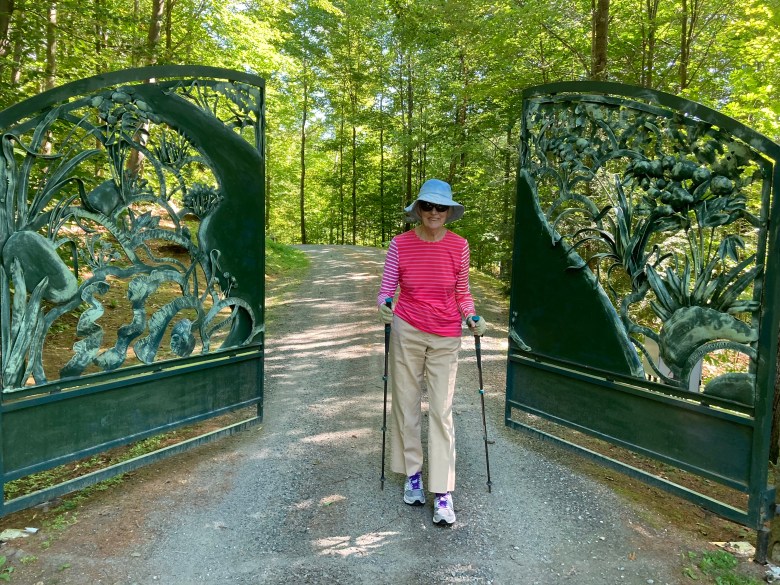
At nearly 6 feet tall and typically donning a bright pink ensemble, Patsy Highberg was never afraid to stand up for what she believed in.
“She was just so steadfast in sticking to her guns,” said Andrew Winter, executive director of Twin Pines Housing Trust. “It was the core of who she was.”
Highberg’s causes were many — including women’s health, land conservation and the public library. But she was perhaps best known for her fierce support of affordable housing. Highberg was instrumental in the development of Safford Commons, Woodstock’s first affordable housing site, which is managed by Twin Pines.
The development — which opened in 2019 and includes 28 affordable rental units and eight owner-occupied units — absolutely “wouldn’t have happened without Patsy,” said Nancy Owens, president of Evernorth, a nonprofit focused on affordable housing.
In her role as president of the Woodstock Community Trust, Highberg was a visionary for the Safford Commons project, orchestrating the purchase of the site and stewarding the project through a multiyear legal battle that culminated in the Vermont Supreme Court.
“She took on a responsibility and a public toll for being the person who was spearheading this project, which had its controversy,” said Owens. While that was wearing, Highberg didn’t falter. “She was stalwart and had such conviction that without a doubt this was the right thing to do. She never wavered.”
‘She went how she wanted to’
Highberg also never wavered on her decision to end her life on her own terms. In May, facing declining physical and cognitive health, the Woodstock resident traveled to Switzerland, taking in the sites for 10 days before choosing medical aid in dying. She was 88.
“She went how she wanted to,” said Jean Maynes, a close friend of Highberg’s for nearly 40 years.
Highberg’s interest in medical aid in dying — which she advocated for in Vermont — began long before her own health challenges, shaped in part by her parents’ end-of-life experiences. She was resolute in her decision to avoid a long, drawn-out decline, opting instead to end her life.
“She was adamant on that from as long as I knew her,” Maynes said.
Highberg left behind two siblings — Carol Tolan and George Hume — as well as nieces and nephews. Yet friends say the people closest to her were found in her Woodstock community.
Highberg was married for 63 years to her husband Paul, who died in 2023. The couple raised the counters in their home to better fit their tall statures and love of cooking, and enjoyed trips to the Caribbean, particularly during the holidays. They chose not to have children, instead pouring themselves into their passions — including Highberg’s award-winning garden.
Helping realize ‘long-term visions’
“Her garden was her baby,” said Maynes. “She put her heart and soul into her garden.”
Highberg crafted the garden to fit into the natural landscape of her property, integrating trees, rocks, streams, mosses and other natural features in a way that was “magical,” said Miranda Shackleton, a fellow garden enthusiast from Bridgewater. Shackleton estimates her own garden is now 20% plantings from Highberg.
Highberg’s garden was well-known locally — where she was a member of the Woodstock Garden Club, which has established a scholarship in her name — and also nationally. In 2012, the garden received a prestigious award from the North American Rock Garden Society, which labelled the garden a “masterpiece.”
Highberg’s ability to stick with a project long-term allowed her to achieve exquisite results, whether in advocating for affordable housing or in growing her garden, said Jill Davies, a board member with Woodstock Community Trust.
“She took other people’s long-term visions and helped them get there,” Davies said.
Highberg brought the same attention to detail to her long-term planning.
She left her 124-acre property, including her beloved garden, to the Vermont Land Trust, to which she had donated for more than 40 years, according to Tracy Zschau, president and CEO of the organization.
The Trust plans to sell the property in 2027, using proceeds to bolster King Farm, a cultural, community and environmental center on the Ottauquechee River.
Zschau declined to speculate what the sale price for Highberg’s property might be, but said the proceeds from the sale will be “transformational” for King Farm. As of 2024, Highberg’s property was assessed at $1.47 million, according to public records.
That final donation is the capstone of a lifetime of philanthropy.
“Patsy was a real believer in putting your money where your mouth is, where your heart is, where your values are,” said Alison Clarkson, a Vermont State Senator and longtime friend of Highberg’s.
‘A quiet but major enabler’
Since 2002, Highberg had donated more than $1.67 million to causes, mostly in the Upper Valley, according to The Vermont Community Foundation, which helped facilitate Highberg’s giving.
“Something that stands out to me is not just the scale of her giving, but her consistency,” said Chelsea Lord, senior philanthropic advisor with the foundation. Highberg’s donor-advised fund still has assets, and the foundation is developing a plan to continue her legacy, including through ongoing gifts to the organizations she cared about, Lord said. Through that fund, Lord adds, Highberg’s impact will last for years, even generations.
Highberg’s wealth could be traced to her father, who started a business dehydrating onions and potatoes, laying the groundwork for kitchen staples like garlic powder. She often donated anonymously but generously, at one point making the then-largest-ever donation to Planned Parenthood of Northern New England, Clarkson said.
“She was a quiet but major enabler of so many things that have made Woodstock and Vermont better places to live,” Clarkson said.
Highberg also gave to the Norman Williams Public Library in Woodstock. Last January, the library hosted an exhibit of Highberg’s artwork, including watercolors and collages, in a show called “Flower Power.”
“What struck me… was how the community turned out to celebrate Patsy,” said Liza Bernard, programming librarian. One photo of the event captures Highberg wearing a bright pink boa, being embraced by a friend.

“She was the colorful lady who went around town with her bright pink and lime green,” Maynes remembered. Even the inside of her garage was pink, friends say, and when Highberg purchased one of the first hybrid vehicles to drive through Woodstock streets, it was brightly colored.
“She was like an extraordinary bird, really,” Shackleton said.
While vibrant, Highberg wasn’t necessarily warm.
“She was a little guarded,” Maynes said.
“She did not suffer fools,” Clarkson added. “She could be very abrupt. She was very direct.”
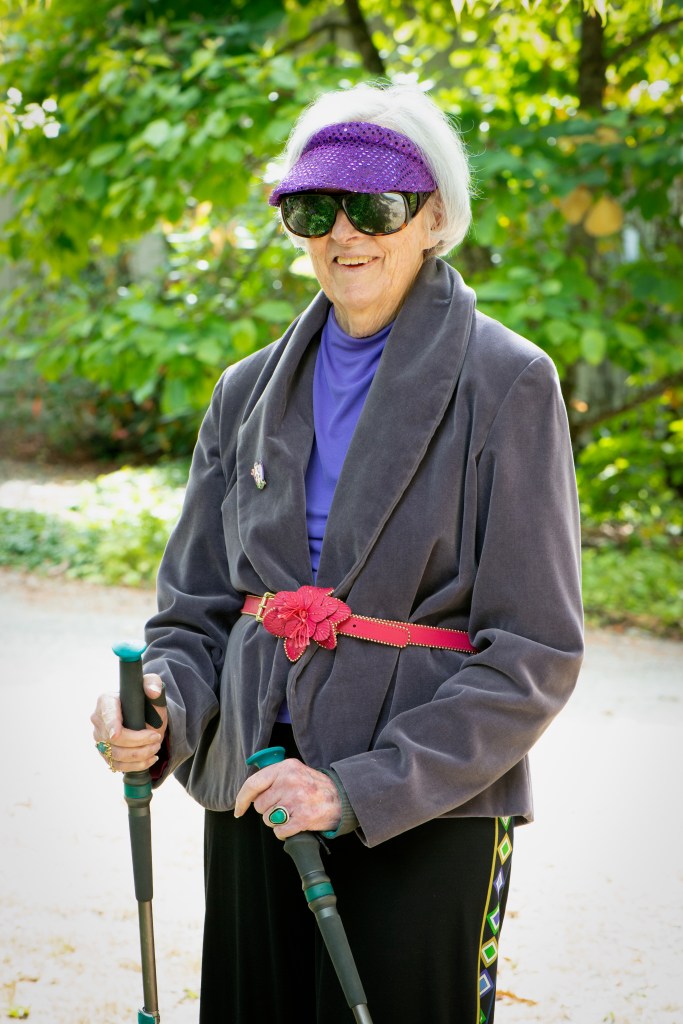
That directness informed all areas of her life. When it came to protecting the environment, Highberg “walked the talk,” installing solar and heat pumps and driving a hybrid well before it was mainstream.
Clarkson last saw Highberg at a May luncheon with friends, just before she left to end her life.
“We had a wonderful time together, celebrating and remembering great things, and telling Patsy how much we love her,” Clarkson said.
When Highberg was in Switzerland during the last week of her life, she’d send Maynes pictures of the scenery, including one of herself at Lake Geneva.
“She wanted her last few days to be surrounded by beauty,” Maynes said. “It was a very peaceful ending for her. She was ready for it.”
Many of those who knew Highberg felt she ended her life how she lived it: with intention.
“She was,” Owens said, “very convicted and clear.”